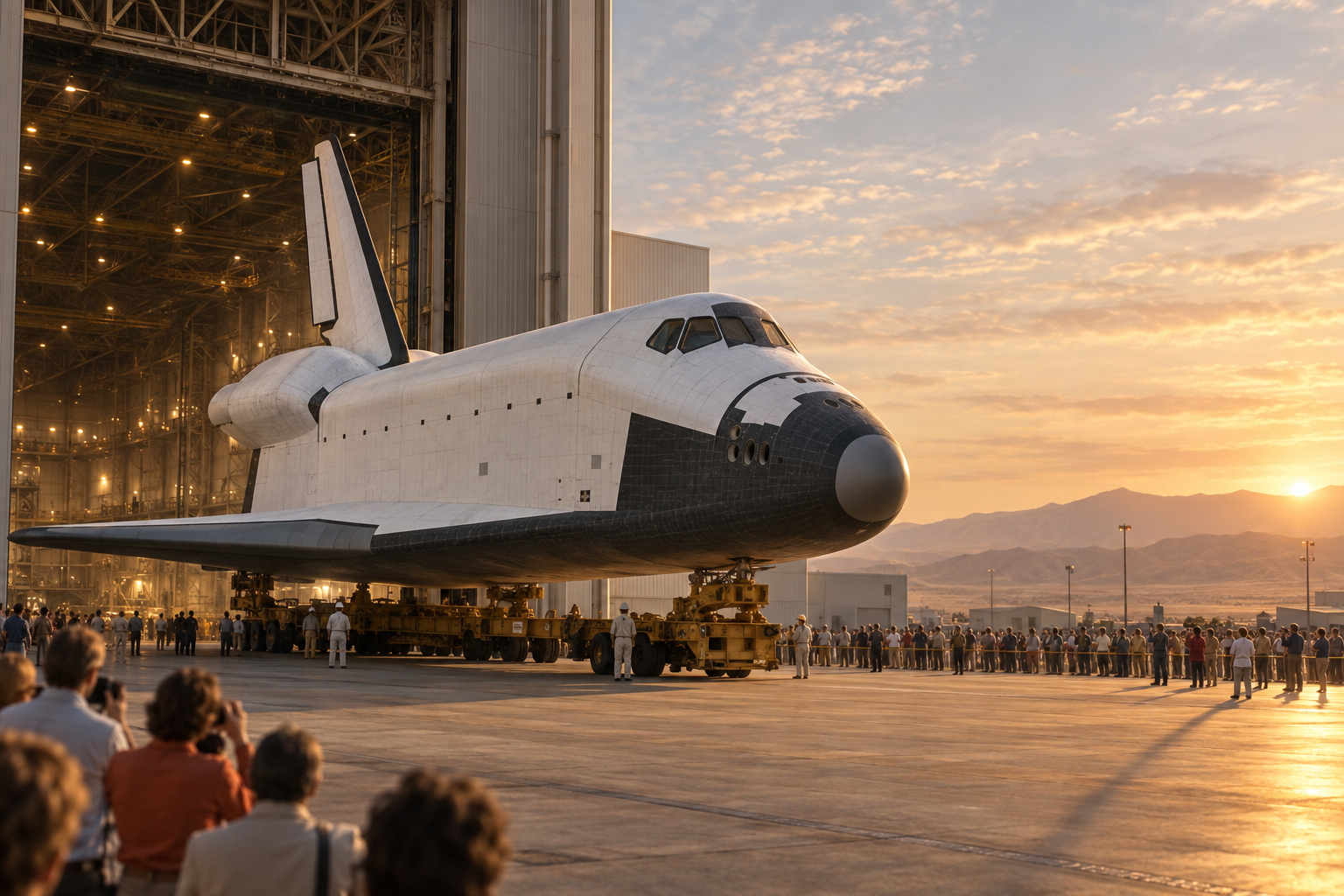
Enterprise was a public debut with an unusual co-author: science-fiction fandom. NASA had planned to call OV-101 Constitution, fitting the country’s bicentennial year and the date of the ceremony. But a large letter-writing campaign from Star Trek fans urged President Gerald Ford to choose Enterprise instead. Ford agreed, and the rollout became part aerospace ceremony, part pop-culture moment. Gene Roddenberry and several cast members attended.
The important correction to the familiar picture is that Enterprise was not an orbital shuttle waiting for a launch. It was built to test how the orbiter behaved in the atmosphere. In 1977, carried aloft by a modified Boeing 747, it began a sequence of captive flights and free flights over Edwards Air Force Base. Those approach-and-landing tests supplied evidence about handling qualities and landing behavior before Columbia became the first shuttle to reach space in 1981.
That makes Enterprise less of a “failed first shuttle” than a reminder of what a prototype is for. A complex program needs a place to discover where the elegant drawing meets wind, weight, heat, and human decision-making. Enterprise’s job was to narrow that uncertainty. It did not need to orbit to matter.
Why the name still lands
The naming campaign is an early example of a public community changing a symbolic decision around a major technical project. It did not alter the engineering plan, but it changed who felt invited into the story. At the rollout, the music from Star Trek was played as the orbiter emerged. NASA’s account records more than 600 invited guests and 185 media representatives; the following day, more than 35,000 people came to see it.
There is a modest lesson here for anyone building or learning with technology: inspiration is not separate from technical literacy. A fictional starship can prompt someone to build a model, learn the sky, read a mission history, or ask better questions about what a reusable spacecraft actually takes to fly.
Two practical ways to follow the thread
These are not replicas of Enterprise and they are not historical evidence. They are two low-stakes ways to turn the story into a hands-on question: how does a shuttle’s shape work, and what can you actually see when you look upward?
BUILD THE SHAPE
A LEGO space shuttle is a useful starting point for scale and systems thinking.
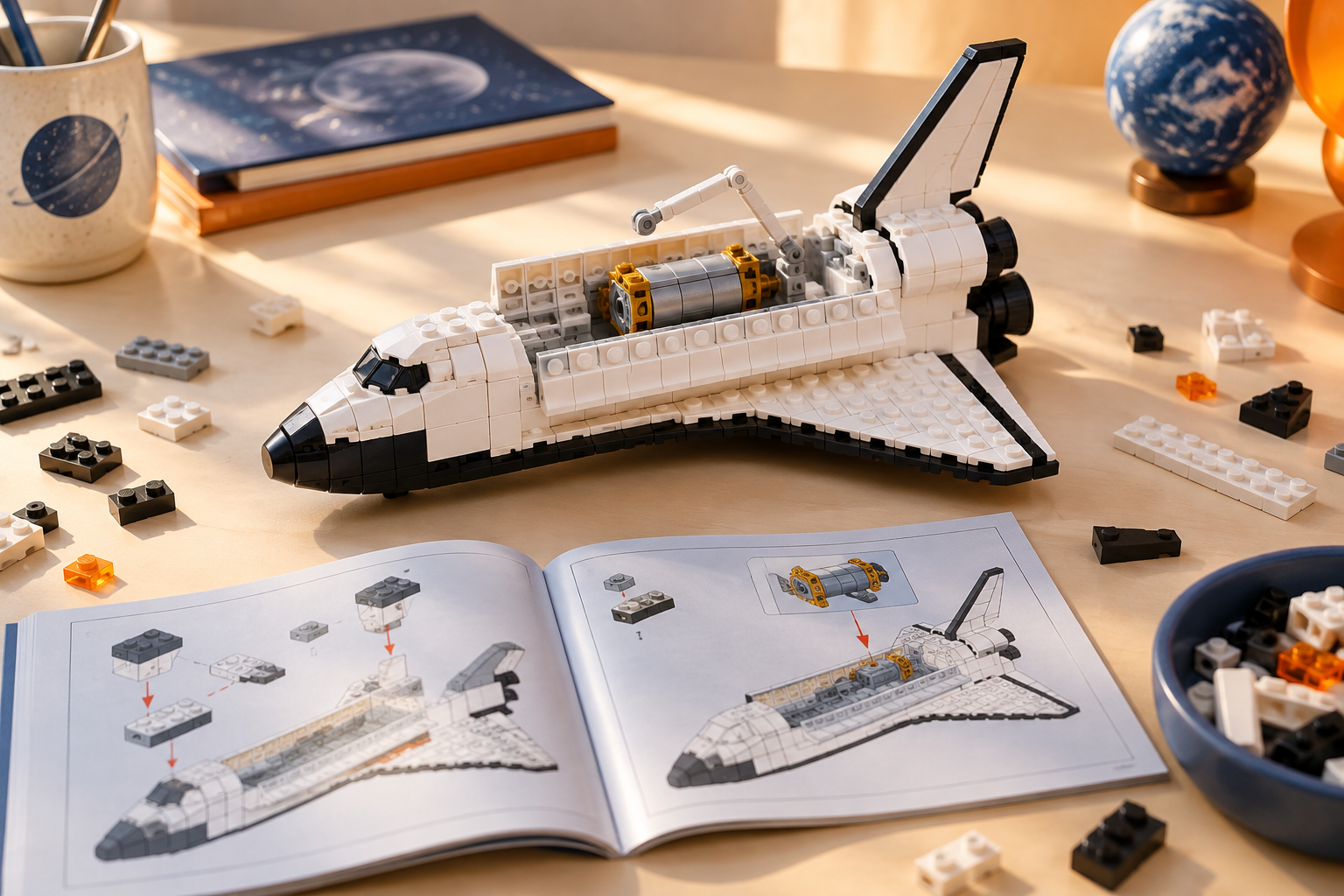
The current LEGO Creator 3-in-1 Space Shuttle set is aimed at ages 6+ and uses 144 pieces. A simple build is appropriate here: it invites questions about payload bays, wings, re-entry, and why a shuttle is not merely a rocket with wings.
Check current Space Shuttle LEGO options on Amazon ↗Availability, seller, age rating, and price change. Confirm the current listing before buying.LOOK UP
A beginner telescope should make the Moon easier to enjoy, not turn setup into homework.
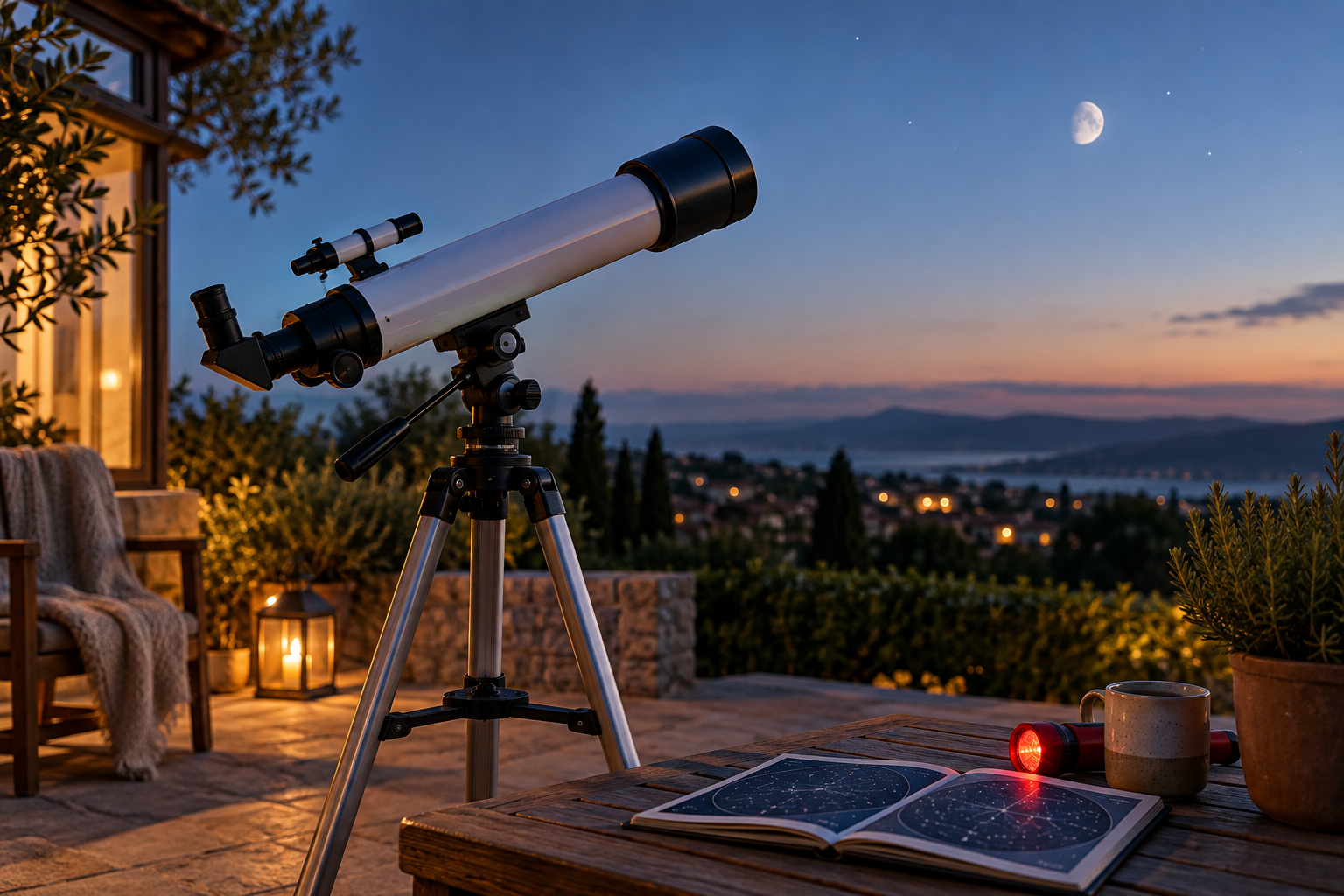
NASA’s Night Sky Network advises new observers to learn the sky gradually and notes that a computerized scope can add intimidating alignment steps. Start with the Moon, use a stable mount, and favor a straightforward refractor or binoculars over a dramatic magnification claim.
Compare beginner telescope options on Amazon ↗Check aperture, mount stability, return terms, and delivery to your U.S. address before purchase.SOURCES AND METHOD
This source-led editorial piece was updated on September 17, 2026. The historical account was checked against NASA’s history of Enterprise’s public debut, NASA’s 50th-anniversary image article, and the NASA Technical Reports Server’s 1976 rollout release. Product directions were checked against the official LEGO Space Shuttle listing and NASA’s beginner telescope guidance. This is editorial research, not a hands-on product test.
KEEP READING
Explore the On This Day archive →See current technology launches →