ON THIS DAY · OCTOBER 27, 1994
Have You Ever Clicked Your Mouse Right Here? How HotWired's 1994 Banner Ad Created the Commercial Web
On October 27, 1994, Wired's digital magazine HotWired went live with a black, rainbow-lettered rectangle from AT&T that changed the economics of human attention forever. Carrying an astonishing 44% click-through rate, the world's first web banner ad proved that the free, open internet could be monetized—unleashing three decades of digital display advertising, tracking cookies, and the attention economy.
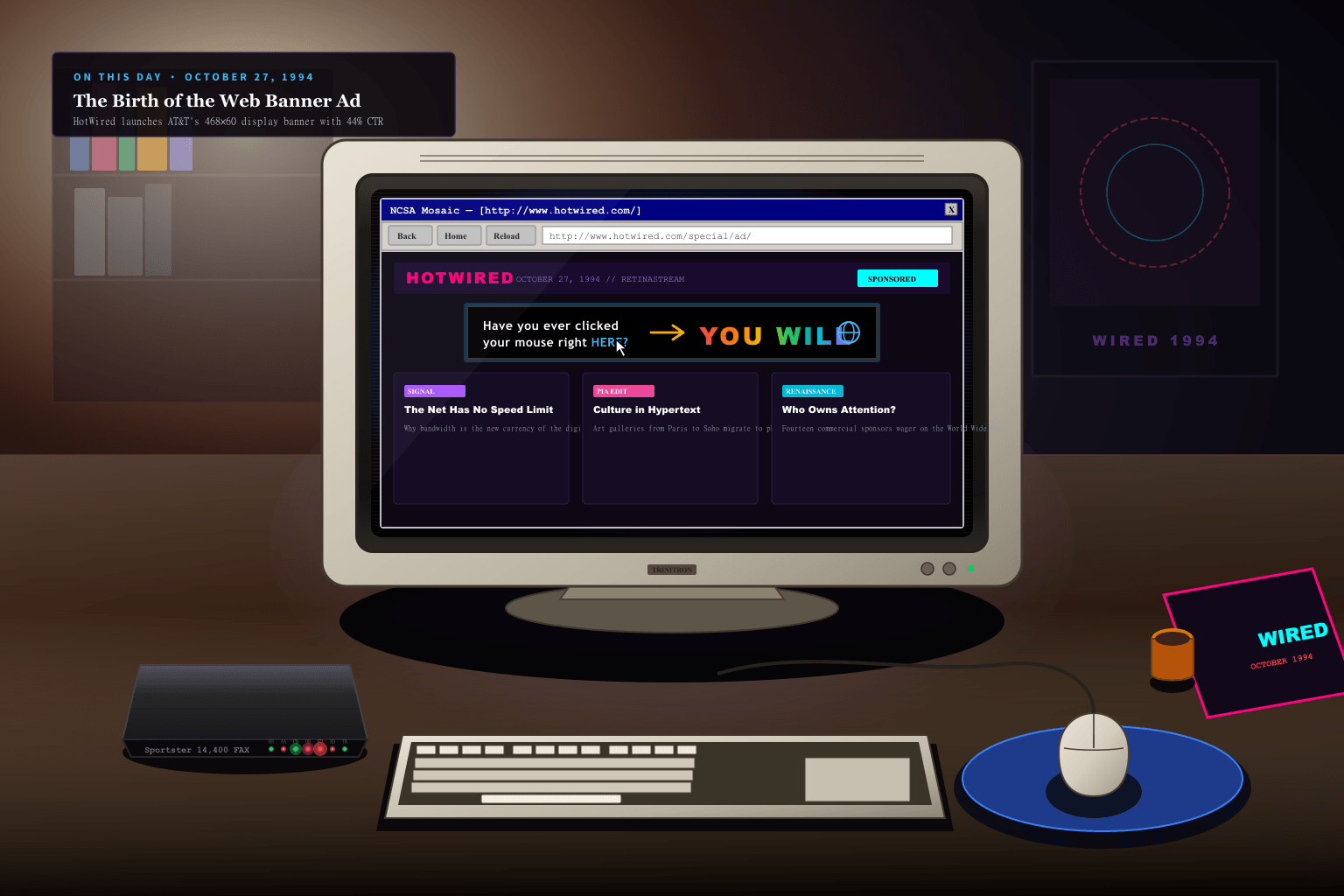
The 468×60 Revolution: When Clicking Was an Act of Discovery
In the autumn of 1994, the World Wide Web was barely an infant. Mosaic and the newly released Netscape Navigator 0.9 were just beginning to transform academic bulletin boards and UNIX terminal displays into clickable, graphical documents. To the purists who had built the early internet under National Science Foundation grants, commercial activity remained taboo—a vulgar intrusion into an intellectual commons. But Louis Rossetto and Jane Metcalfe, the visionary co-founders of Wired magazine, recognized an undeniable reality: running high-bandwidth digital servers, commissioning original writing, and employing full-time software engineers required capital. If readers refused to pay monthly subscription fees for web access, another benefactor had to foot the bill.
On October 27, 1994, HotWired went live from an airy loft in San Francisco's South of Market district. Positioned conspicuously at the top of its electric purple, high-contrast digital pages was a 468-pixel by 60-pixel black graphic banner. Created by a fledgling digital agency called Tangient—led by creative director Joe McCambley and technologist Craig Kanarick—on behalf of AT&T and its advertising agency Ayer, the graphic broke every established rule of Madison Avenue. It carried no corporate logo, no product snapshot, no pricing discount, and no telephone number. Instead, it featured a simple, enigmatic challenge set in jagged rainbow typography: 'Have you ever clicked your mouse right HERE? ⇒ YOU WILL.'
The response was electric. In an era when internet users numbered fewer than twenty million worldwide and every hyperlink was a novelty, an astonishing 44 percent of visitors who encountered the banner clicked it. Today, a display ad with a 0.05 percent click-through rate is considered acceptable by digital marketing standards. But on October 27, 1994, nearly half of everyone who saw the AT&T banner eagerly pointed their cursor at the screen and clicked, crossing a psychological threshold that would define modern media: the transaction of human curiosity for commercial sponsorship.
Beyond the Billboard: The Lost Promise of Corporate Patronage
One of the enduring myths surrounding the HotWired milestone is that AT&T used the first banner to sell consumer hardware or long-distance calling packages. In reality, modern ecommerce did not exist in October 1994—Netscape would not introduce Secure Sockets Layer (SSL) encryption until November of that year, making credit card transmission over the open web virtually impossible. Instead, the banner served as an extension of AT&T's critically acclaimed 'You Will' television campaign, directed by David Fincher and voiced by Tom Selleck, which had captivated American viewers by visualizing video payphones, electronic toll collection, and tablet computers.
When an early netizen clicked the HotWired banner, they were not sent to a high-pressure sales funnel or a lead-capture form. Instead, the hyperlink routed them across the nascent web to a virtual directory curated and hosted by AT&T that linked directly to three cultural institutions: the Louvre museum in Paris, the Library of Congress, and the Andy Warhol Museum in Pittsburgh. Users who had previously never seen the Mona Lisa or browsed archival historic photographs could now explore cultural treasures on their flickering VGA monitors, entirely subsidized by a telecommunications giant.
As Joe McCambley later reflected in the Harvard Business Review, the creators' original intent was closer to public museum patronage than intrusive surveillance. The goal was to provide genuine utility and wonder to a community exploring a brand-new frontier. AT&T paid HotWired $30,000 for a three-month exclusive sponsorship across a section of the site—a sum that helped prove web publishing could sustain paid salaries without government grants or academic subsidies.
From Curiosity to Surveillance: The Unintended Legacy of the Banner
While the 1994 HotWired experiment proved that the web could be financially self-sustaining, it unwittingly set in motion dynamics that would consume the medium. Within eighteen months, the 468×60 pixel format became the rigid global standard codified by the Internet Advertising Bureau (IAB). However, as thousands of commercial websites adopted banner ads and corporate marketers flooded the web with flashing animations, deceptive 'Click Here to Win!' buttons, and intrusive pop-up windows, user behavior shifted dramatically. The phenomenon known as 'banner blindness' took hold: readers learned to subconsciously ignore the top and side margins of web pages entirely.
As click-through rates plummeted from 44 percent in 1994 toward fractions of a single percent by the early 2000s, ad networks responded not by improving creative quality or adding cultural value, but by multiplying volume and tracking user identity. The simple static GIF gave way to DoubleClick tracking pixels, third-party advertising cookies, real-time programmatic auctions, cross-site identity profiling, and heavy JavaScript tracking scripts. A web page that loaded in two seconds in 1995 now frequently downloads dozens of tracker scripts and hundreds of megabytes of advertising overhead before displaying a single paragraph of text.
Thirty-two years later, the consequences of October 27, 1994 surround every digital screen. The banner ad funded the vast expanse of free software, global search engines, social networks, and independent journalism that define the modern web. Yet it also spawned the multi-billion-dollar ad-blocker industry, consumer privacy regulations like GDPR, and the relentless attention economy. The simple rainbow banner asked whether we would click our mouse—and three decades later, the entire digital world is still living with the answer.
What the evidence does not settle
While the AT&T banner on HotWired is universally celebrated as the first web banner ad, it is historically important to note that HotWired launched with fourteen distinct commercial sponsors on October 27, 1994—including Club Med, Volvo, Zima, and MCI. AT&T's creative became the defining symbol because of its audacious 'You Will' copy and unprecedented 44% click-through rate. Furthermore, the 44% engagement rate was largely an artifact of early internet novelty and low baseline banner density, rather than an enduring benchmark for display advertising efficiency.
PRODUCT IDEA 01
GL.iNet GL-MT3000 (Beryl AX) Pocket Wi-Fi 6 Router with Hardware AdGuard Home
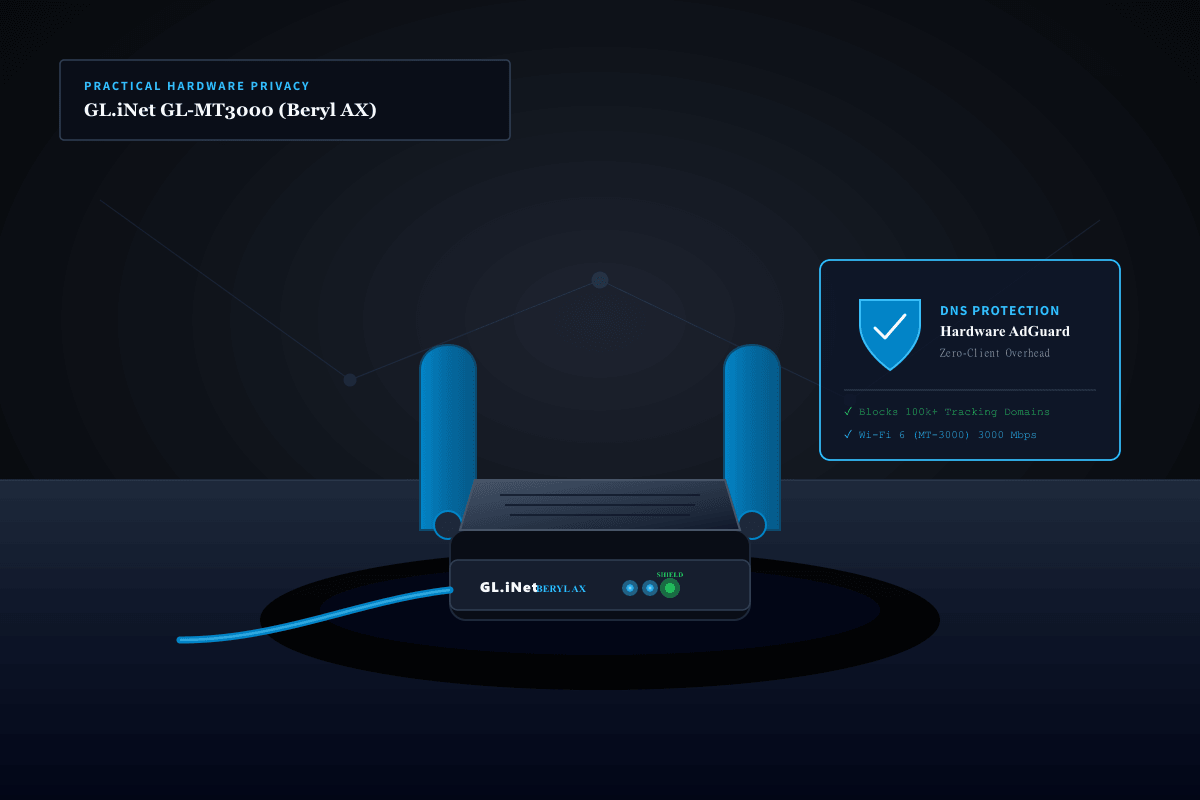
Thirty-two years after the first web banner ad initiated commercial online advertising, the modern web has become congested with invasive tracking scripts, data brokers, and heavy display ads that degrade browsing performance and compromise digital privacy. The GL.iNet GL-MT3000 (Beryl AX) is a compact, high-performance pocket router engineered specifically for privacy-conscious users and frequent travelers. Powered by an MT7981B dual-core processor with Wi-Fi 6 speeds up to 3,000 Mbps and multi-gigabit 2.5G Ethernet, its killer feature is native, pre-installed AdGuard Home and WireGuard/OpenVPN client support. By filtering advertising domains, telemetry beacons, and malware trackers at the local network DNS level before packets ever reach your smartphone, tablet, or laptop, it restores a fast, clean browsing experience across all connected devices without requiring client-side browser extensions on every individual operating system.
Buying limit: Engineered for network-level ad blocking, encrypted VPN routing, and portable Wi-Fi 6 connectivity. Note that DNS-based ad blocking neutralizes domain-level trackers and traditional display banner ads across all devices, but cannot parse encrypted within-stream video ads (such as YouTube native video insertions) that share the same origin host domain. Best used as a comprehensive first line of network defense alongside content-aware browser tools.
Original editorial illustration, not a retailer photograph. No exact Amazon offer passed our verification gate.PRODUCT IDEA 02
The Attention Merchants: The Epic Scramble to Get Inside Our Heads — Tim Wu
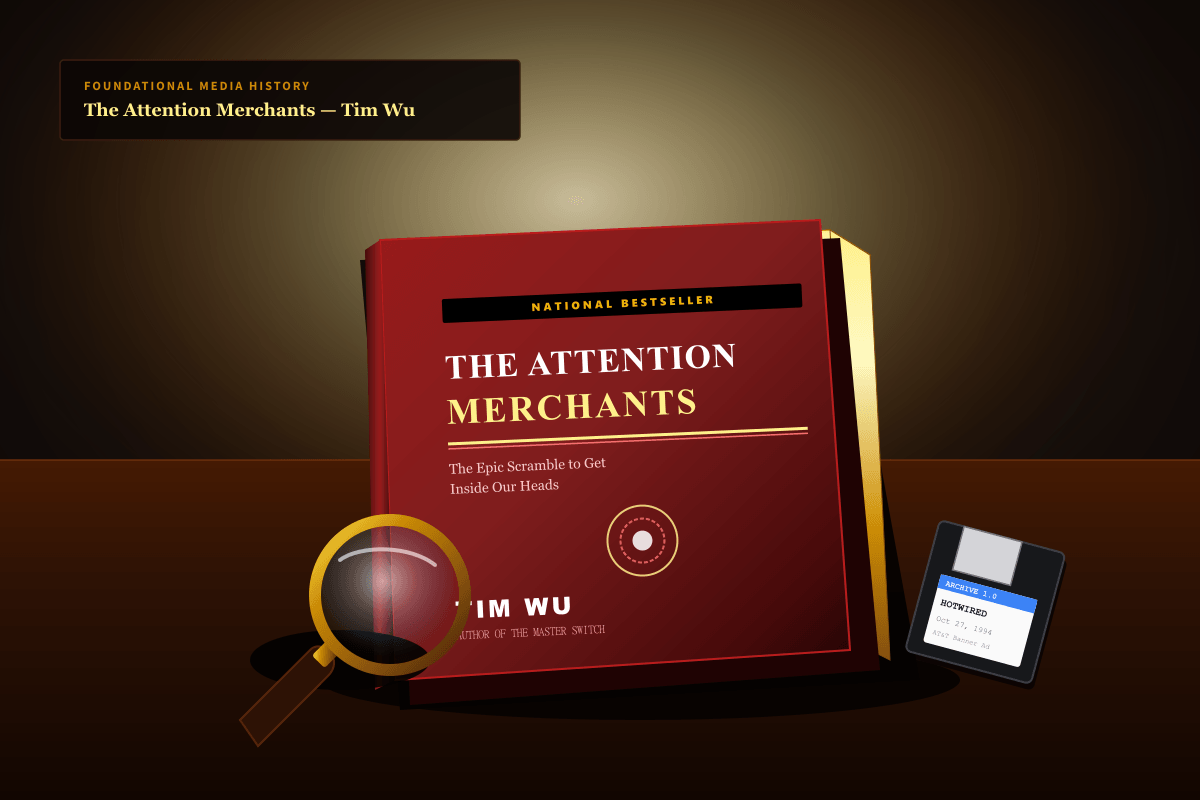
To understand how a single 468×60 pixel banner on HotWired in 1994 metastasized into the multi-trillion-dollar attention economy that governs our smartphones today, there is no more definitive or gripping historical account than Tim Wu's 'The Attention Merchants: The Epic Scramble to Get Inside Our Heads' (Alfred A. Knopf / Vintage). Wu, a renowned Columbia Law professor who famously coined the term 'net neutrality', unspools the fascinating century-long history of businesses that capture human consciousness and resell it to commercial advertisers. Tracing the trajectory from 19th-century penny press newspapers and British billboard hoardings through golden-age radio, primetime television networks, and into Silicon Valley's algorithmic news feeds, Wu places the 1994 banner ad into vital context: the fateful moment when the internet abandoned the subscription model and accepted attention capture as its primary economic engine.
Buying limit: Widely available in paperback (ISBN-10: 0345806251 / ISBN-13: 978-0345806253, 416 pages), hardcover, unabridged audiobook, and digital eBook editions. Highly recommended for software developers, digital marketers, sociologists, and everyday web users seeking historical clarity on how digital platforms monetize human focus and screen time.
Original editorial illustration, not a retailer photograph. No exact Amazon offer passed our verification gate.SOURCES, METHOD, AND LIMITS
Researched and corroborated using primary retrospectives from creative director Joe McCambley published in the Harvard Business Review, archival reporting from Wired magazine's October 1994 launch records, historical standards documentation from the Interactive Advertising Bureau (IAB), and Computer History Museum records on web commercialization. All dates, pixel dimensions, campaign taglines, and historical figures have been verified against institutional archives.
- Harvard Business Review — The First Banner Ad, 20 Years Later (Joe McCambley) — Primary retrospective by the creative director who co-authored the 1994 AT&T HotWired banner ad, documenting the original copy, the 44% click-through rate, and the decision to link to virtual art museums.
- Wired Magazine — The Untold Story of the First Banner Ad — Archival investigative feature recounting the October 27, 1994 launch of HotWired, the 468x60 pixel dimensional standard, and the commercial agreements that initiated digital display advertising.
- Computer History Museum — The Commercialization of the World Wide Web — Institutional research archive detailing the technological and economic shift of the internet from an academic research network into an ad-supported public medium during the mid-1990s.