ON THIS DAY · OCTOBER 8, 1958
A Heartbeat on Two Transistors: How Rune Elmqvist and Åke Senning Implanted the World's First Cardiac Pacemaker
On October 8, 1958, at Stockholm's Karolinska Hospital, cardiac surgeon Åke Senning made medical history by implanting a miniature, battery-powered pulse generator designed by engineer Rune Elmqvist into 43-year-old Arne Larsson. Encased in hand-poured epoxy resin within a simple plastic cup, the crude device failed after just three hours—yet it ignited the modern bioelectronics revolution, kept Larsson alive for another 43 years across 26 replacement devices, and proved that human organs could be sustained from within.
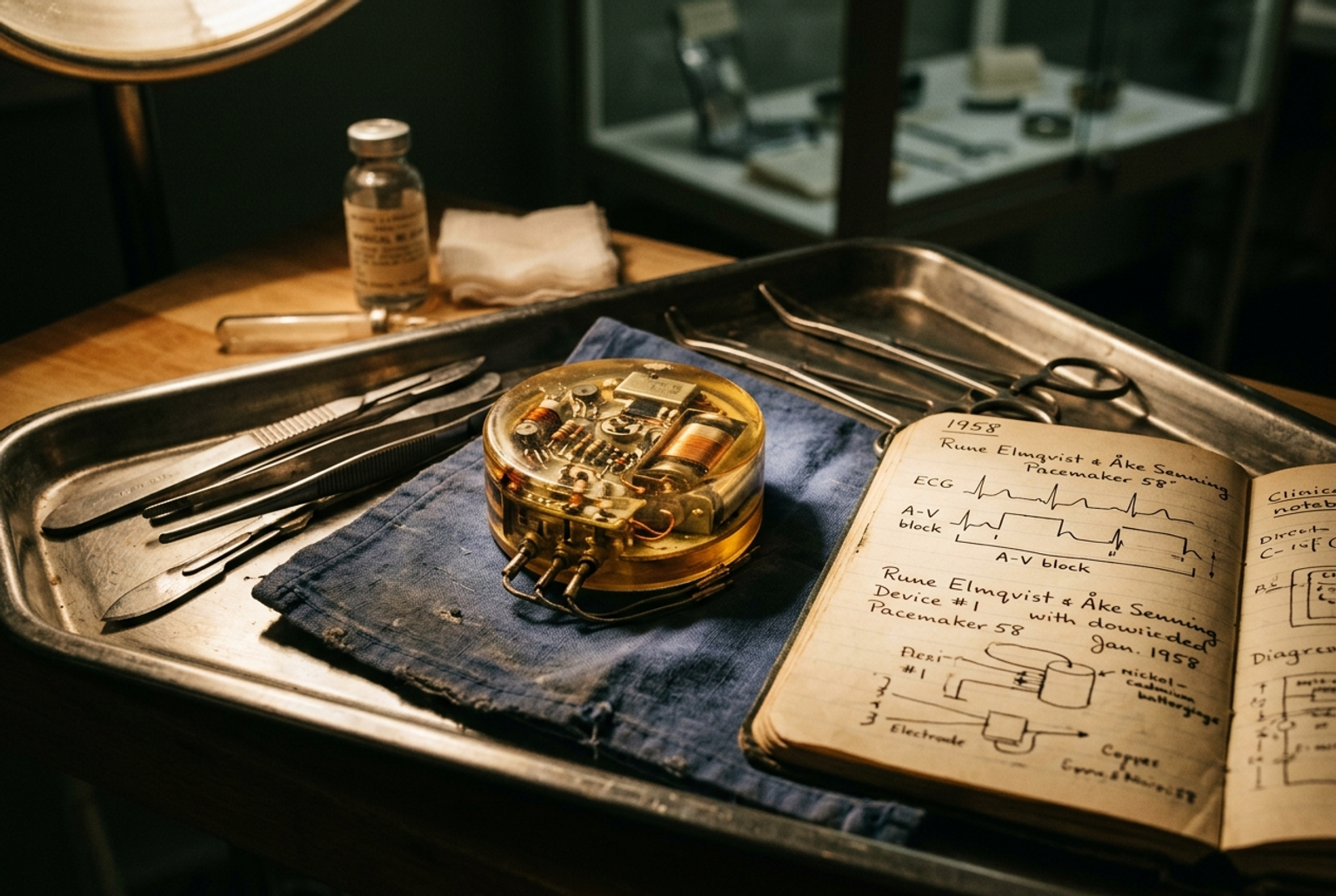
The Stokes-Adams Agony: Why External Pacing Was an Unsustainable Torment in 1958
In the autumn of 1958, 43-year-old Swedish engineer Arne Larsson was dying in bed at the Karolinska Hospital in Stockholm. Six months earlier, a severe bout of viral hepatitis or myocarditis had irreparably damaged his heart's intrinsic electrical conduction pathways, triggering third-degree complete atrioventricular (AV) block. His sinus node in the right atrium continued to fire at a normal seventy beats per minute, but the electrical impulses could no longer cross the fibrous barrier to reach the ventricles. Instead, his ventricular myocardium was forced to rely on sluggish, unstable idioventricular escape rhythms that frequently plunged to twenty beats per minute—or ceased entirely.
The consequences were terrifying Stokes-Adams attacks: sudden cardiac arrest producing immediate cerebral ischemia, catastrophic loss of consciousness, and violent convulsions. On his worst days, Larsson suffered twenty to thirty syncopal episodes in twenty-four hours. His hospital room was in a perpetual state of emergency; his attending physicians and nurses resuscitated him dozens of times each week with intracardiac adrenaline injections, vigorous closed-chest cardiac massage, and desperate manual thumps to the sternum. He was completely bedridden, physically exhausted, and slipping toward irreversible neurological damage or fatal ventricular standstill.
At the time, clinical cardiology possessed only one mechanical defense against heart block: the external electro-stimulator developed by Dr. Paul Zoll at Boston's Beth Israel Hospital in 1952. Zoll's machine was an undeniable lifesaving breakthrough, but for long-term patient maintenance, it was an instrument of physical torment. The apparatus was a bulky, 45-kilogram console that plugged directly into a 110-volt alternating-current wall outlet. It delivered rhythmic 100-to-150-volt electrical impulses through large brass electrodes strapped tightly to the patient's chest wall. Every beat delivered a painful electric shock that triggered violent, convulsive contractions of the pectoral and intercostal muscles, severe skin burns, and agonizing psychological distress. Patients could not sleep, could not leave their hospital beds, and were at constant risk of fatal electrocution if hospital mains power flickered or shorted. Zoll's external pacing could preserve life for days or weeks in acute post-surgical emergencies, but as a permanent therapy for a mobile human being, it was an impossible dead end.
The Plastic Cup and the Shoe-Polish Tin: Rune Elmqvist's Hand-Potted Pulse Generator
Salvation arrived not from a pharmaceutical laboratory, but from the fertile mind of Dr. Rune Elmqvist, an extraordinary polymath who held degrees in both medicine and electrical engineering. Working as chief engineer at Elema-Schönander (an electro-medical equipment manufacturer in Solna that would later evolve into Siemens-Elema), Elmqvist had already revolutionized clinical cardiology by inventing the Mingograf—the world's first high-speed ink-jet multichannel electrocardiograph recorder. In 1957, Elmqvist began collaborating with Dr. Åke Senning, a brilliant 42-year-old thoracic surgeon at the Karolinska Hospital who had spent years researching open-heart surgery, artificial oxygenators, and cardiac fibrillation.
Senning was convinced that the only way to treat chronic complete heart block without torturing the patient was to place the entire stimulator inside the patient's body, eliminating transcutaneous skin-resistance barriers and the danger of wire-tract sepsis. The technical obstacle was size. Until the late 1950s, pulse circuits required vacuum tubes that consumed substantial power and ran excessively hot. The turning point was Bell Telephone Laboratories' commercialization of the junction transistor. Elmqvist realized that newly available miniature germanium transistors (specifically RCA-manufactured p-n-p types) could be wired into an astable multivibrator or blocking oscillator that operated at negligible current draws, producing two-volt pulses of 1.5-millisecond duration at a steady pacing rate of seventy to eighty beats per minute.
Powering an internal device presented an equally daunting conundrum. Primary chemical batteries of the era (such as zinc-carbon cells) discharged rapidly and outgassed toxic chemical vapors. Elmqvist solved this by sourcing two miniature rechargeable nickel-cadmium accumulators (each rated at 60 milliampere-hours, manufactured by Georg Neumann). To recharge them without piercing the skin, Elmqvist wound a miniature flat induction pickup coil inside the generator housing. Once a month, the patient would place an external primary transmission coil connected to a 150-kilohertz radio-frequency charger over their skin for twelve hours, recharging the internal cells via transcutaneous magnetic induction.
When Else-Marie Larsson, Arne's fiercely devoted wife, learned of Senning and Elmqvist's experimental work in a Stockholm newspaper, she marched into the Karolinska Hospital and pleaded with the surgeons to attempt the unproven procedure on her dying husband. Elmqvist initially hesitated; he had tested prototype circuits on dogs, but had not yet engineered a polished clinical unit. Driven by Else-Marie's relentless insistence, Elmqvist spent the first week of October 1958 in his laboratory hand-assembling two prototype units. Lacking specialized industrial molds, he poured Araldite epoxy resin into a simple disposable plastic cup (and according to company lore, utilized an empty Kiwi shoe-polish tin as an alternative casting jig) to pot the delicate germanium transistors, inductive recharge coil, and nickel-cadmium cells into a smooth, biocompatible, hockey-puck-shaped puck measuring fifty-five millimeters in diameter and sixteen millimeters in thickness. Two insulated stainless steel suture wires protruded from the epoxy to serve as myocardial electrodes.
The Midnight Operation at Karolinska: Three Hours of Rhythm and a Dawn Revision
On the evening of October 8, 1958, the historic surgical drama unfolded in total secrecy. Senning and Elmqvist were keenly aware that if an unapproved, experimental internal electrical implant failed in a human patient during ordinary clinical hours, the resulting institutional backlash and ethical controversy could permanently shut down their research. They waited until the main surgical suites at Karolinska had cleared and the hospital fell quiet. At approximately 8:00 PM, Larsson was wheeled into operating theater 2 for an exploratory thoracotomy.
Senning incised Larsson's left chest wall through the fourth intercostal space, divided the pericardium, and exposed the patient's failing heart. He carefully sutured the two bare stainless steel electrode tips directly into the myocardium of the anterior left ventricle. The potted epoxy generator was then tunneled into a subcutaneous surgical pocket created in Larsson's left abdominal wall. When Senning connected the lead wires to the generator terminals, the result was immediate, dramatic, and historic: the internal oscillator captured the ventricular myocardium. Larsson's pulse surged from twenty sluggish beats to a crisp, metronomic seventy beats per minute. Within minutes, his skin color shifted from deathly pale to pink, his arterial blood pressure stabilized, and the operating room exhaled.
The triumphant relief, however, proved brutally brief. Approximately three hours later, while Larsson was recovering in the intensive care ward, the monitor alarms sounded. The pacing spikes on the bedside electrocardiogram suddenly vanished; Larsson's heart rate collapsed back into idiopathy, and he suffered another severe syncopal arrest. The first prototype had failed. Later post-mortem analysis of the device indicated that one of the fragile germanium transistors had suffered electrical breakdown under the thermal stress of setting resin, or that mechanical myocardial contraction had dislodged the unanchored lead interface.
Undeterred, Senning refused to let his patient slip away. In the early morning hours of October 9, 1958, Senning rushed back into the hospital operating room. Elmqvist arrived carrying the second—and only remaining—prototype pulse generator, which he had quickly inspected and recharged overnight. In a second emergency thoracotomy, Senning excised the non-functioning first unit and implanted the backup pacemaker, securing the myocardial suture leads with reinforced surgical silk. This second unit held firm. Larsson woke up free of dizziness, completely lucid, and permanently liberated from the terrifying abyss of Stokes-Adams convulsions. The second pacemaker paced his heart faithfully for nearly six weeks until its nickel-cadmium cells eventually depleted, by which time commercial manufacturing of improved clinical units had officially begun.
Forty-Three Years and Twenty-Six Devices: Arne Larsson's Living Proof of Bionic Medicine
Arne Larsson's recovery was nothing short of miraculous. Within months of his 1958 procedures, the bedridden engineer who had been given days to live walked out of Karolinska Hospital and returned to active employment as an electrical engineer. Over the subsequent four decades, Larsson led a remarkably vigorous and fulfilling life: he traveled the world for business, sailed boats, skied Swedish cross-country trails, and became an international ambassador for cardiac pacing, meeting with clinicians, bioengineers, and fellow pacemaker recipients across Europe and the United States.
Because he was the world's first permanent pacemaker recipient, Larsson's chest served as the living proving ground for four decades of bioengineering evolution. Over his lifetime, he underwent twenty-six pacemaker replacement surgeries and utilized five distinct myocardial and transvenous lead systems. He witnessed the entire technological trajectory of cardiovascular engineering: transitioning from Elmqvist's discrete germanium transistors and inductively recharged nickel-cadmium cells in the late 1950s, to Wilson Greatbatch's mercury-zinc primary battery generators in the 1960s, to the game-changing introduction of transvenous endocardial leads (threaded safely through the cephalic or subclavian vein without requiring open thoracotomy), and finally to modern hermetically welded titanium cans powered by high-density lithium-iodine batteries and managed by programmable demand microprocessors.
Arne Larsson lived until December 28, 2001, passing away at the age of 86 from an advanced melanoma—a death completely unrelated to his cardiovascular condition. In an extraordinary historical testament to the efficacy of the device they pioneered, Larsson outlived both of his original benefactors: Rune Elmqvist died in 1996 at the age of 89, and Dr. Åke Senning passed away in 2000 at the age of 84. When Senning was asked in his later years about that tense midnight surgery on October 8, 1958, he remarked with typical Swedish modesty that they had simply refused to watch a young man die when electrical technology offered even a slender chance of salvation. Today, more than 1.25 million people worldwide receive an implantable pacemaker every year, their heartbeats sustained by an engineering lineage that trace directly back to two transistors potted in a plastic cup in Stockholm.
What the evidence does not settle
Popular folklore often suggests that Rune Elmqvist's initial 1958 pacemaker functioned continuously for decades; in clinical reality, the first unit operated for merely three hours before electrical failure, and the backup unit required replacement within six weeks. Early 1958 pacemakers were strictly fixed-rate (asynchronous) pulse generators that stimulated the ventricles regardless of intrinsic rhythm, carrying a modest risk of triggering ventricular fibrillation if an electrical pulse landed on the vulnerable T-wave repolarization phase (demand pacing was not introduced until the mid-1960s). Modern cardiac devices operate through transvenous endocardial leads or self-contained intracardiac micro-capsules (such as leadless pacemakers) powered by hermetic lithium-iodine chemistries lasting up to fifteen years without external inductive recharging. Recommended historical books and biometric heart monitors represent independent editorial evaluations rather than medical diagnostic instruments or commercial sponsorships.
PRODUCT IDEA 01
The Invention of Surgery: A History of Modern Medicine: From the Renaissance to the Implant Revolution — Dr. David Schneider
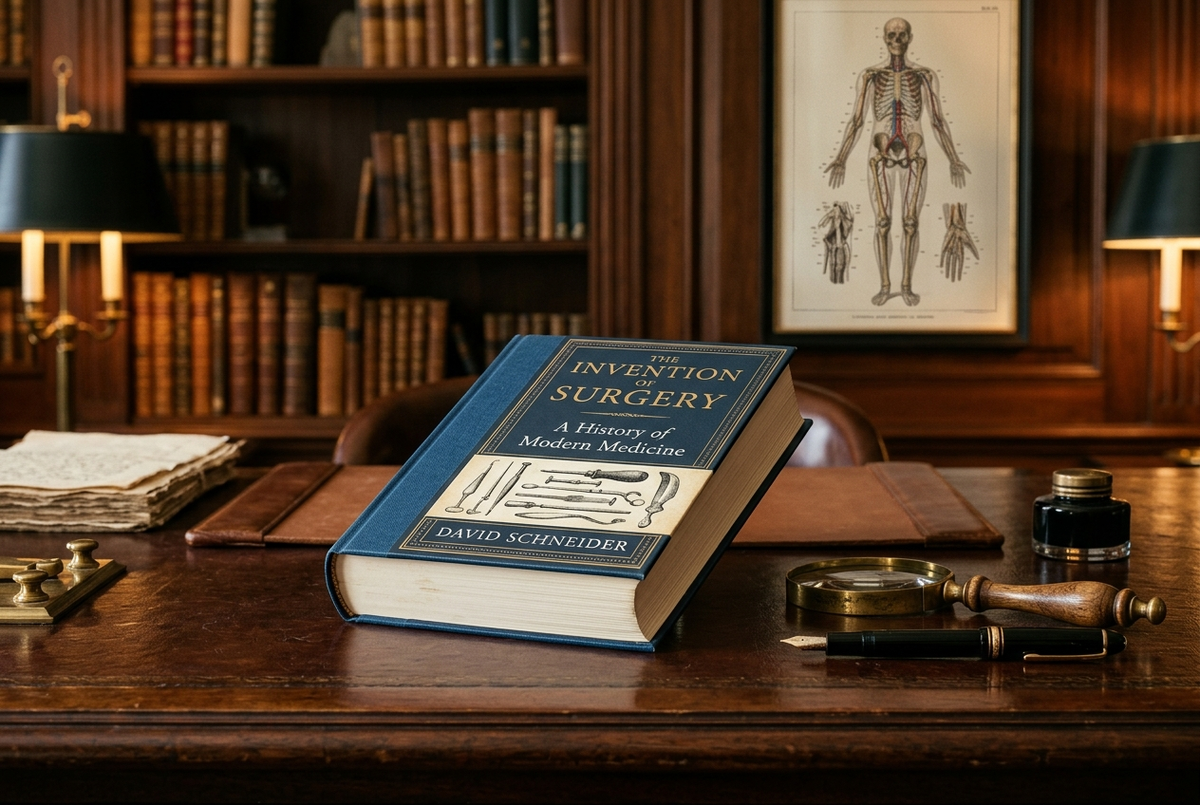
In 'The Invention of Surgery', practicing orthopedic surgeon and medical historian Dr. David Schneider delivers a gripping, panoramic narrative tracing surgery's transformation from crude anatomical carpentry to the sophisticated 'implant revolution' of the twentieth century. Schneider dedicates crucial analysis to how the intersection of polymer chemistry, miniaturized electronics, and aseptic surgical technique enabled doctors to replace and augment failing human organs from within. He contextualizes the immense intellectual daring of mid-century pioneers like Åke Senning and Rune Elmqvist, illustrating how implantable pacemakers bridged the gulf between mechanical biology and electrical engineering. Written with clinical precision, dark humor, and deep historical reverence, Schneider's book is essential reading for anyone seeking to understand how bioengineering transformed the human condition from passive mortality to active technological repair.
Buying limit: Available in handsome hardcover, paperback, and unabridged digital formats from major booksellers (published by Pegasus Books / Simon & Schuster, ISBN 978-1643133331). When selecting a physical edition, prioritize the hardcover or standard trade paperback containing the full 16-page central archival plate section and unabridged bibliography. Academic readers should ensure that notes and index sections are fully intact, as Schneider's extensive source citations provide invaluable pathways into twentieth-century surgical and bioengineering primary literature.
Original editorial illustration, not a retailer photograph. No exact Amazon offer passed our verification gate.PRODUCT IDEA 02
Precision Dual-Band ECG Chest-Strap Heart Rate Monitor (Bluetooth & ANT+)
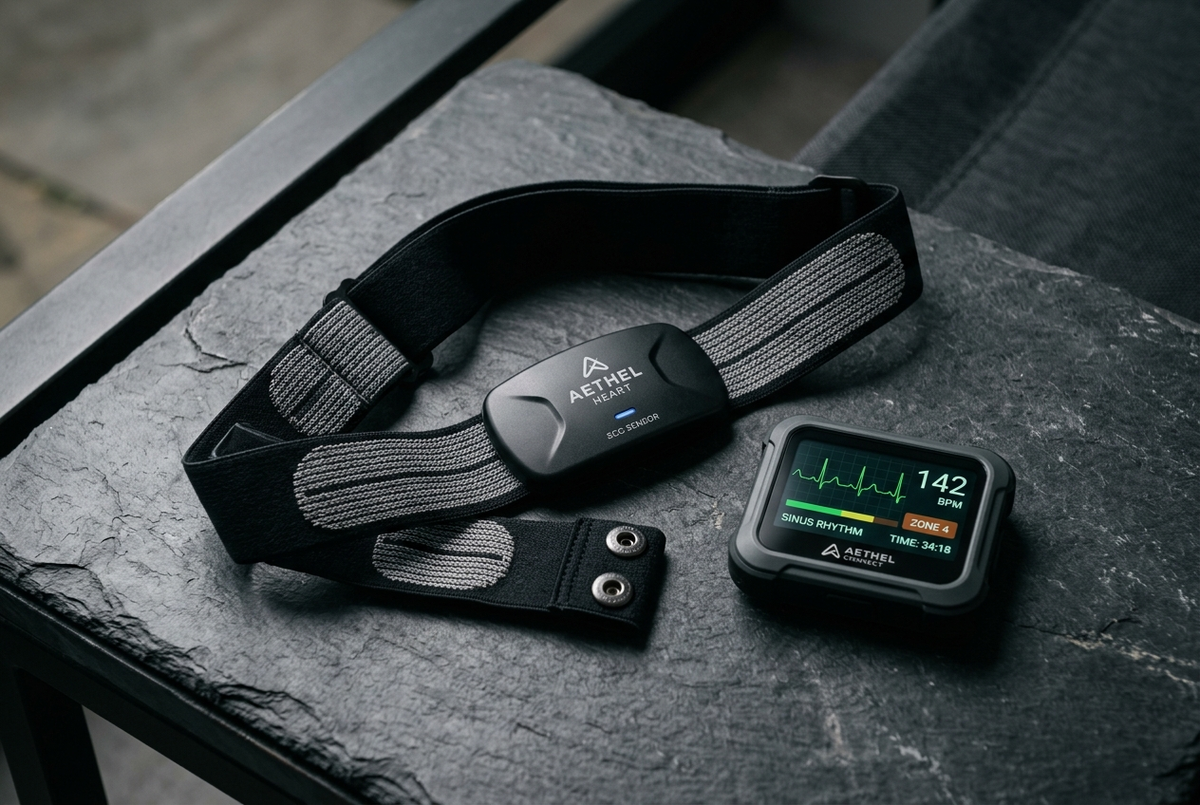
The fundamental bioelectric principle that Rune Elmqvist harnessed in 1958—measuring and interacting with the millivolt electrical potentials generated by cardiac muscle depolarization—now powers modern wearable sports science and telemetry. While contemporary smartwatches rely on optical photoplethysmography (PPG) sensors that illuminate capillaries to approximate pulse rates, high-performance chest straps utilize true electrocardiographic (ECG) conductive fabric electrodes. By detecting the heart's electrical vector across the thoracic cavity in real time, these dual-band Bluetooth and ANT+ transmitters deliver clinical-grade R-R interval precision (microsecond beat-to-beat variability) impervious to wrist movement artifacts or cold vasoconstriction, serving as direct heirs to the electronic rhythm monitoring pioneered at Karolinska Hospital.
Buying limit: Select chest straps featuring dual-protocol broadcast (Bluetooth Low Energy and ANT+) from established biometric manufacturers (such as Polar H10 or Garmin HRM-Pro Plus) with user-replaceable CR2032 coin cell batteries rather than sealed rechargeable cells, ensuring uninterrupted multi-year longevity. Verify that the strap features medical-grade conductive silicone or woven fabric pads that can be hand-washed. Crucially, recognize that while chest straps provide millisecond electrical timing for athletic conditioning, they are not diagnostic Holter monitors and cannot diagnose medical arrhythmias or replace prescribed clinical cardiac surveillance.
Original editorial illustration, not a retailer photograph. No exact Amazon offer passed our verification gate.SOURCES, METHOD, AND LIMITS
Researched using clinical and historical archives from the Karolinska Institutet Thoracic Surgery archives, the National Library of Medicine (PubMed ID 12685152: 'Lessons from the first patient with an implanted pacemaker: 1958–2001' by B. Larsson, H. Elmqvist, L. Rydén, and H. Schüller in PACE), the historical review by O. Aquilina in PubMed Central (PMC3232561: 'A brief history of cardiac pacing'), and the Siemens Healthineers MedMuseum corporate heritage monograph on Elema-Schönander ('A Lifesaver in a Plastic Cup'). Technical circuit parameters (RCA germanium transistors, 2V pulse amplitude, 1.5ms pulse width, 150 kHz transcutaneous induction recharging, Araldite epoxy potting) were corroborated across peer-reviewed electrophysiology journals. No consumer health hardware or medical electronics were physically evaluated for this historical analysis.
- National Library of Medicine (PubMed) — Lessons from the First Patient with an Implanted Pacemaker: 1958–2001 (PMID: 12685152) — Authoritative clinical retrospective in PACE co-authored by Arne Larsson's and Rune Elmqvist's families alongside Karolinska cardiologists, documenting Larsson's 43-year survival, 26 pacemaker replacements, and lifetime medical follow-up.
- PubMed Central (PMC) — A Brief History of Cardiac Pacing (PMC3232561) — Peer-reviewed historical study by O. Aquilina detailing the clinical evolution from Paul Zoll's external vacuum-tube stimulators to Rune Elmqvist and Åke Senning's 1958 implantable transistorized pulse generator.
- Siemens Healthineers MedMuseum — A Lifesaver in a Plastic Cup: The History of the First Implantable Pacemaker — Official corporate heritage monograph and artifact archive of Elema-Schönander (later Siemens-Elema), recording Rune Elmqvist's epoxy casting, circuit schematics, and October 8, 1958 surgical documentation.