ON THIS DAY · TECHNOLOGY HISTORY
Mars Climate Orbiter: the unit mismatch that survived the checks
NASA's investigation traced the loss to incompatible units in navigation data. Its follow-up report asks a harder question: why did the project's checks let that error reach Mars?
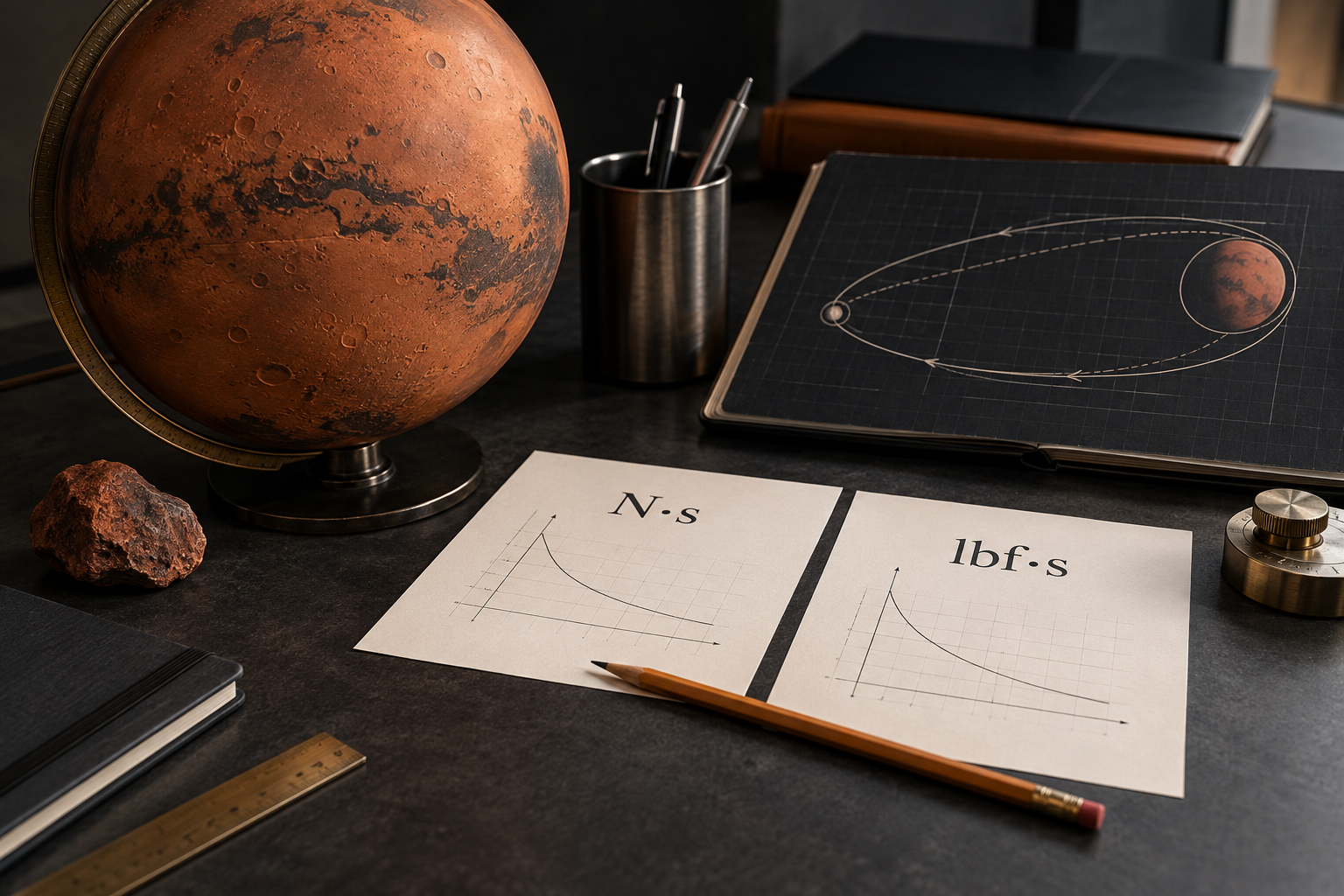
A weather mission that never began its survey
NASA's mission overview describes an orbiter built to investigate the Martian atmosphere and support communications with Mars Polar Lander. Launched on December 11, 1998, it reached Mars the following September. Its intended work would have continued long after arrival; losing the spacecraft also meant losing those planned observations.
An anniversary account can easily spend all its attention on the arithmetic. The scientific purpose deserves space too. Readers looking for what the spacecraft was supposed to measure should start with NASA's mission overview; readers investigating the failure should go to the board reports listed below. Those documents answer different questions.
The mismatch was in ground navigation data
The Phase I board report identifies the ground program SM_FORCES. Its output supplied thruster impulse data in English units, although the documented interface required metric units. The navigation team treated the values as compliant. The mismatch therefore entered the trajectory modelling through a data handoff.
The same report lists inadequate ground-software verification among the contributing causes. Describing this as a spacecraft randomly switching measurement systems obscures where investigators located the problem. A useful diagram would follow the data from producer to consumer, with the expected unit written at the receiving end.
Why a correct specification was insufficient
The March 2000 follow-up report widened the investigation to project management. The board criticised the combination of resource reductions and insufficient discipline in development, validation and operations. It also found that NASA already had substantial management processes that were not being implemented adequately.
Its recommendations included stronger continuity between development and operations, clearer responsibilities, adequate staffing and reviews that pursued concerns to closure. These were recommendations from an investigation, not proof that every proposed reform was subsequently carried out. The report supports a broader explanation than blaming one conversion alone; it does not justify guessing what an individual engineer knew or intended.
A smaller-scale check for anyone importing numbers
Our practical reading of this case is to test the handoff, including what the receiving tool thinks a value means. For a spreadsheet import, put the unit in the field name and try one known example before loading the full file. If a supplier changes the export format, repeat that check. These are editorial suggestions for ordinary data work, not NASA procedures or a substitute for safety-critical engineering review.
Keep the example small enough to inspect without trusting the same software that performs the import. A table can look tidy while its columns have the wrong meaning. Record the expected result beside the sample input so that the next person maintaining the sheet can repeat the check, rather than having to reconstruct your assumptions.
What the evidence does not settle
The Phase I report leaves the spacecraft's final fate unresolved between atmospheric destruction and departure into heliocentric space. We have not simulated its trajectory or independently audited the mission software. We also omit a dollar-loss total because development, launch and combined-program figures require different accounting boundaries.
PRODUCT IDEA 01
A metric-versus-imperial engineer mug

For the colleague who labels every spreadsheet column, a measurement-themed mug is a desk-gift direction with a genuine connection to this story. Let the joke stay on the mug; keep real conversion references in documentation you can verify. When comparing an actual listing, check capacity, handle clearance and the maker's cleaning instructions before choosing the slogan.
Buying limit: This is a gift idea, not a tested product recommendation. The pictured design is an original concept, not an identified item for sale. We have not verified an exact Amazon.com mug or current US delivery, so there is no purchase link.
Original editorial illustration, not a retailer photograph. No exact Amazon offer passed our verification gate.PRODUCT IDEA 02
The Martian by Andy Weir — paperback

Andy Weir's novel takes a fictional survival problem to Mars. It is a reading direction for someone drawn to resource constraints and problem-solving, rather than a source on the 1999 investigation. The publisher identifies the paperback as ISBN 9780553418026. Match the language and edition when buying or borrowing; the blank book in our illustration is a conceptual prop, not its cover.
Buying limit: An Amazon.com listing for ASIN 0553418025 was located, but the available snapshot showed an older delivery date. That does not establish today's seller or delivery to your US address. We have withheld the affiliate link and made no current price, rating or availability claim.
Original editorial illustration, not a retailer photograph. No exact Amazon offer passed our verification gate.SOURCES, METHOD, AND LIMITS
Prepared from the executive summaries of NASA's Phase I and follow-up investigation reports, with the NASA mission overview for mission context and Penguin Random House for the book edition. This is document-based editorial research, not an engineering reconstruction or a hands-on product test. Practical spreadsheet advice is labelled as our interpretation. The three images were generated specifically for this story and do not reproduce historical photographs or retailer images.
- NASA investigation board — Phase I, November 10, 1999 — Executive summary, printed pages 6–8: unit mismatch, contributing causes and the two possible final outcomes. The board's findings are the basis of the failure account.
- NASA investigation board — project management report, March 13, 2000 — Executive summary: resource and process findings and management recommendations. This is a follow-up by the same board, not independent corroboration.
- NASA Science — Mars Climate Orbiter mission overview — Mission purpose and dates. For uncertainty about the final fate, this article follows the original board report rather than treating the overview's shorter account as a complete investigation.
- Penguin Random House — The Martian paperback — Publisher record for Andy Weir's novel and paperback ISBN 9780553418026. It does not verify today's Amazon seller, price or US delivery.