ON THIS DAY · JULY 1, 1979
The Blue-and-Silver Box That Privatized Sound: How Sony's 1979 Walkman Created Personal Audio
Before July 1, 1979, listening to music on the go meant hauling a heavy boombox or tolerating tinny transistor radio speakers. When Sony packaged stereo cassette playback into a pocketable aluminum chassis, it created the soundtrack of modern personal mobility.
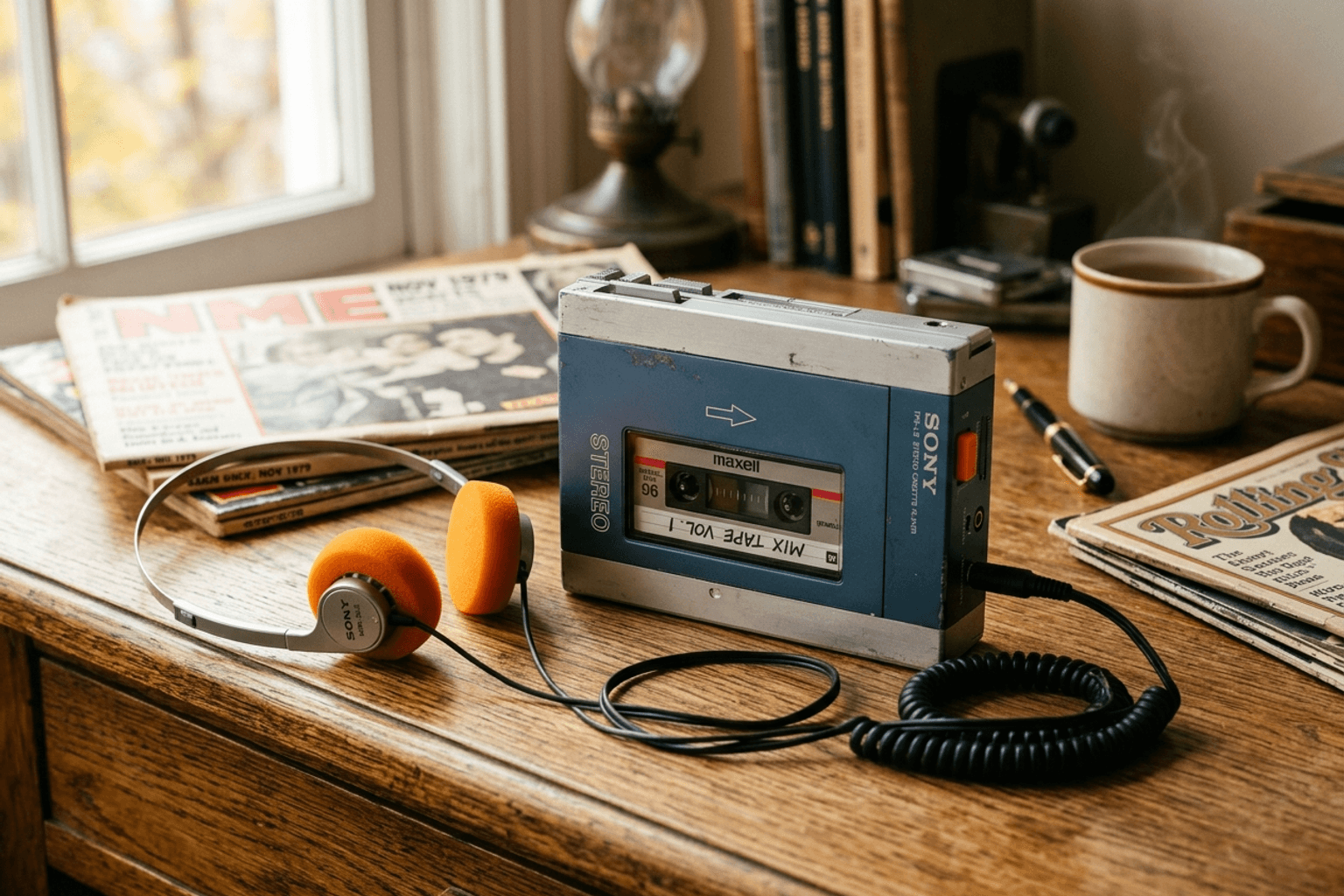
The Pressman Modification: Stripping the Recording Circuit
In late 1978, Sony honorary chairman Masaru Ibuka frequently traveled across the Pacific on long international flights. Frustrated by the bulk of contemporary stereo cassette decks, Ibuka asked his tape engineering team if they could modify Sony's compact Pressman (TCM-100) business dictation recorder so he could listen to opera cassettes on airplanes with high-fidelity stereo sound.
Engineer Kozo Ohsone stripped the heavy recording electronics, erase head, and speaker from the Pressman chassis, substituting a low-distortion stereo playback preamplifier and miniature balance controls. When Sony chairman Akio Morita tested the prototype in February 1979, he immediately recognized that youth culture would embrace portable stereo music, ordering an aggressive production run of 30,000 units before international marketing consensus had even been reached.
The MDR-3L2 Featherweight Headphones: Halving the Weight of Sound
The true unsung engineering breakthrough that made the Walkman viable was headphone miniaturization. In 1979, standard hi-fi headphones were massive over-ear enclosures weighing 300 to 400 grams with thick cords, designed strictly for living room armchairs.
Sony acoustic engineer Hiroshi Kawamoto developed the MDR-3L2 headphones using high-energy samarium-cobalt magnets and thin mylar diaphragms. Weighing a mere 50 grams, these open-air, orange-foam headphones delivered full-range dynamic bass and crisp highs without clamping the user's skull, making walking, jogging, and skateboarding with music comfortable for hours.
Cultural Impact: From 'Guys & Dolls' to Global Acoustic Solitude
Fearing that listening with headphones in public would isolate people socially, Sony included two 3.5mm stereo headphone jacks labeled 'GUYS & DOLLS' and an orange 'HOT LINE' button that lowered the music and opened an internal microphone so companions could converse without removing their headsets.
However, consumers overwhelmingly embraced the Walkman for solitary immersion. The device democratized personal privacy in crowded subways, gym workouts, and city streets. By the time production ceased, Sony had sold over 400 million Walkman devices across tape, CD, MiniDisc, and digital formats, cementing the paradigm that paved the direct path to the Apple iPod and modern smartphones.
What the evidence does not settle
Early critics in 1979 predicted the Walkman would fail because it lacked recording capabilities and required frequent AA battery replacements (delivering roughly 2.5 hours of continuous playback on alkaline cells). Sony overcame initial slow sales through aggressive guerrilla street marketing with roller-skating brand ambassadors in Tokyo's Yoyogi Park.
PRODUCT IDEA 01
Retro Cassette Tape Style Bluetooth 5.3 Stereo Speaker
A compact Bluetooth portable speaker crafted in the exact form-factor and nostalgic styling of a 1980s cassette tape, featuring dual passive bass radiators and rechargeable battery.
Buying limit: Look for Bluetooth 5.3 chips with minimum 8-hour playtime and USB-C charging. Quality novelty retro speakers cost $22 to $40.
Original editorial illustration, not a retailer photograph. No exact Amazon offer passed our verification gate.PRODUCT IDEA 02
Professional Over-Ear Studio Monitor Headphones with Detachable Cable
High-fidelity closed-back studio monitor headphones with 40mm neodymium dynamic drivers, offering balanced acoustic staging, plush ear cushions, and 3.5mm/6.35mm gold-plated plugs.
Buying limit: Opt for replaceable velvet or protein leather ear cushions and durable metal headband sliders. Quality studio monitors range from $50 to $120.
Original editorial illustration, not a retailer photograph. No exact Amazon offer passed our verification gate.SOURCES, METHOD, AND LIMITS
Researched using archival technical monographs from Sony Group Corporation Archives (Tokyo), IEEE Consumer Electronics Society historical papers, and Akio Morita's memoir Made in Japan. No commercial products were physically tested.
- Sony Group Corporate History — The Story of the Walkman TPS-L2 — Official corporate archival retrospective detailing Masaru Ibuka's airplane requirements, Kozo Ohsone's skunkworks prototype, and MDR-3L2 headphone acoustics.
- IEEE Consumer Electronics Magazine — The Walkman Effect: 40 Years of Portable Audio Architecture — Technical analysis examining samarium-cobalt transducer efficiency, cassette wow-and-flutter stabilization, and battery power management.