ON THIS DAY · NOVEMBER ARCHIVE
November in Tech History.
5 source-led historical investigations into the discoveries, patents, and engineering pivots that took place in November.
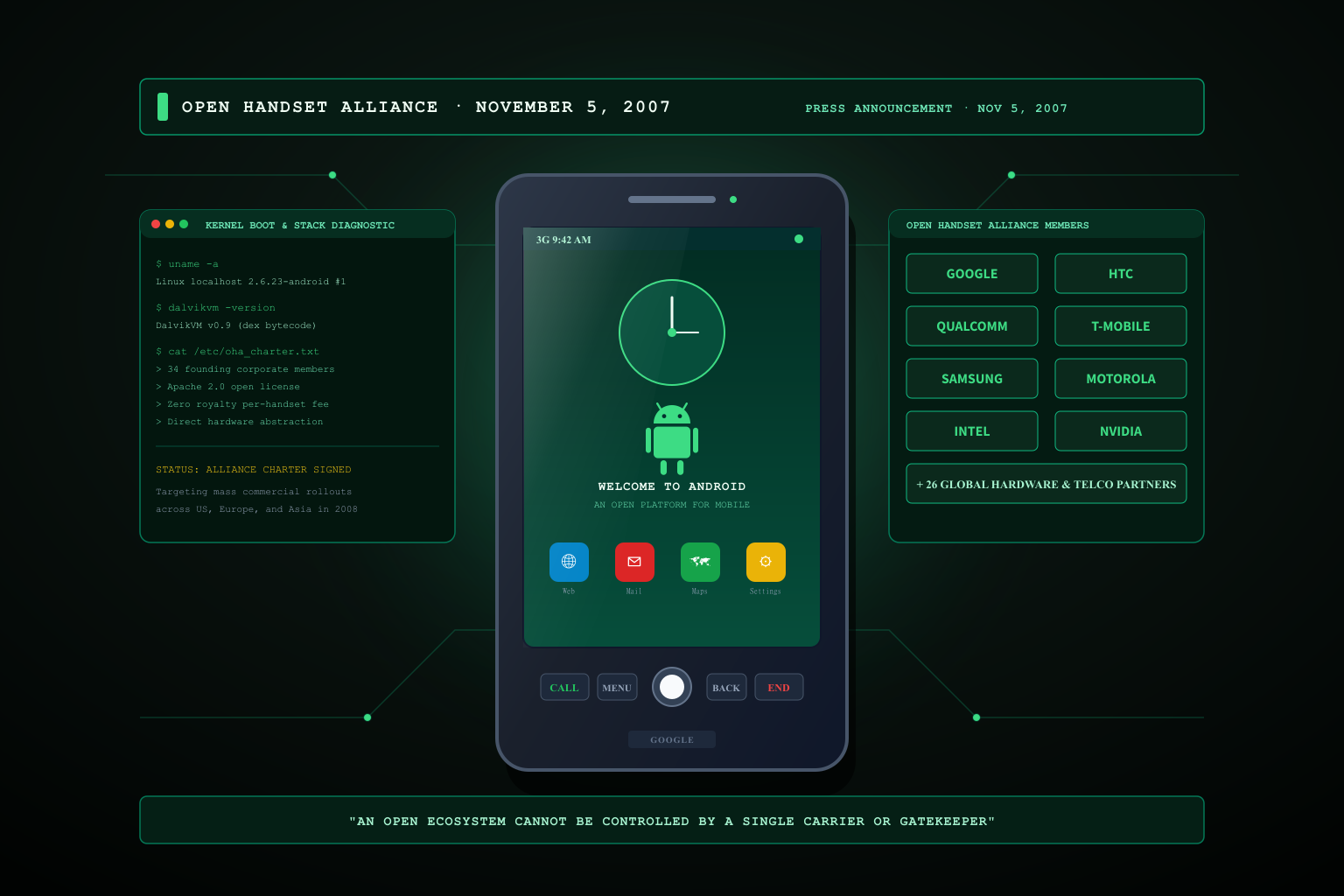
The Alliance That Set the Smartphone Free.
On November 5, 2007, Google and a coalition of 33 hardware makers, carriers, and chip manufacturers unveiled Android—a royalty-free, open-source Linux operating system that dismantled cellular carrier monopolies and catalyzed the modern mobile internet.
Read the source-led story →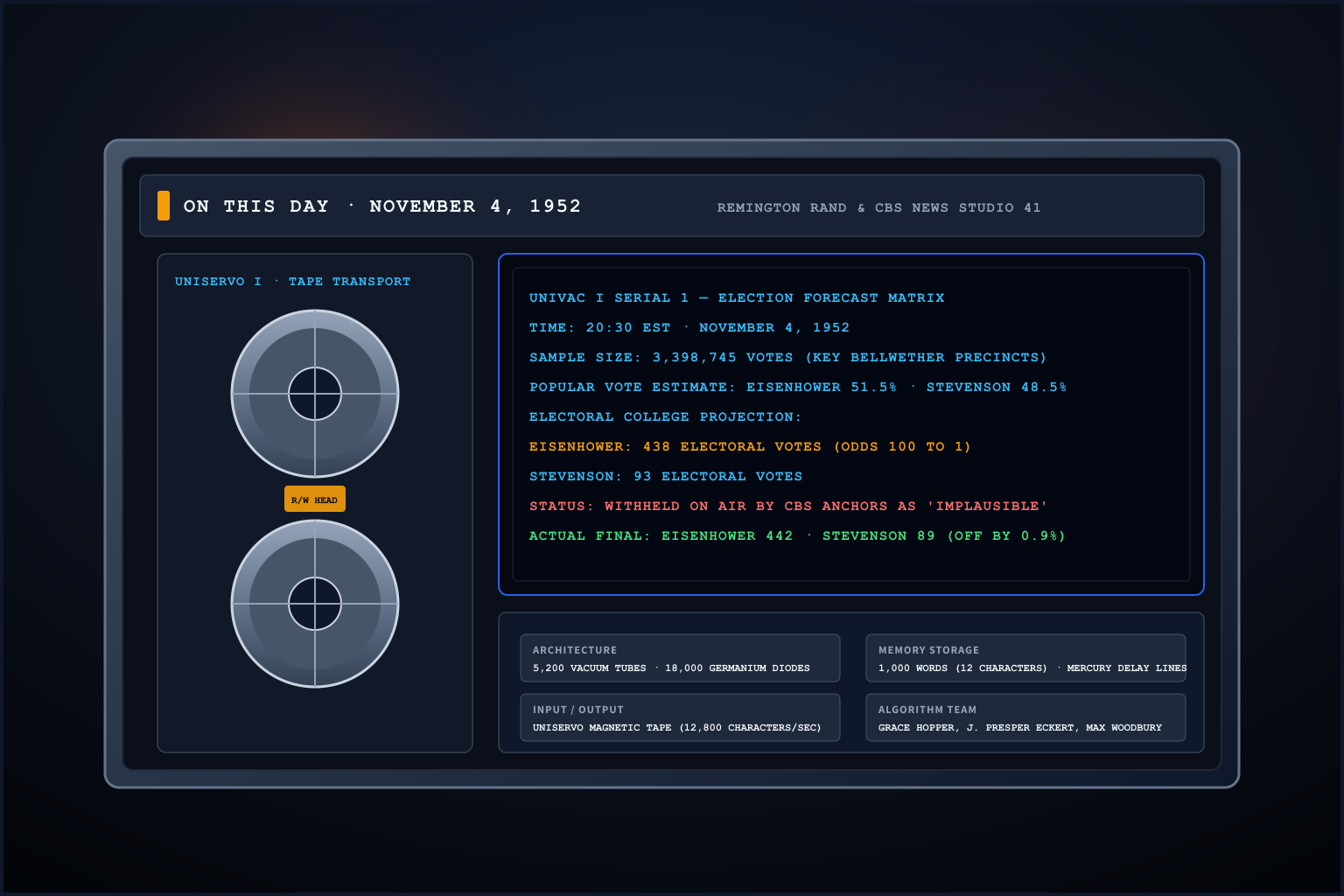
The Night the Computer Predicted the Presidency.
On November 4, 1952, CBS News hitched its presidential election broadcast to an 8-ton UNIVAC I. When the machine predicted an unthinkable Eisenhower landslide by 8:30 PM, news executives panicked and buried the numbers—until actual ballot counts proved the electronic brain had been right all along.
Read the source-led story →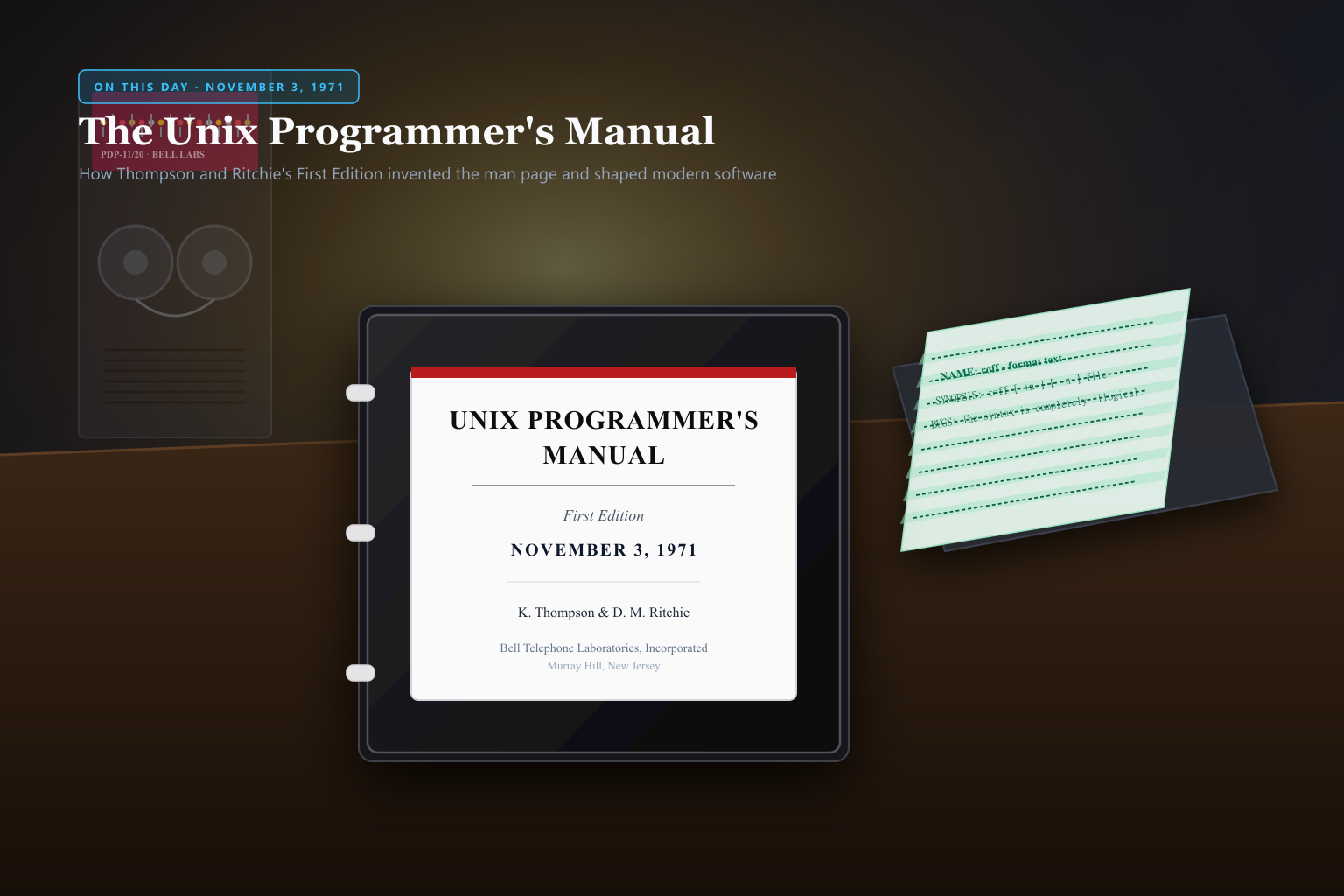
The Man Page That Built Modern Computing How Thompson and Ritchie's 1971 Unix Manual Redefined Software Ergonomics
On November 3, 1971, computer scientists Ken Thompson and Dennis Ritchie published the First Edition of the Unix Programmer's Manual at Bell Telephone Laboratories in Murray Hill, New Jersey. Documenting Unix running on a Digital Equipment Corporation PDP-11/20, this seminal binder established the standardized 'man page' architecture, introduced fundamental tools like cat, cp, and roff, and codified the Unix philosophy of building small, sharp programs that do one job well and compose through plain text.
Read the source-led story →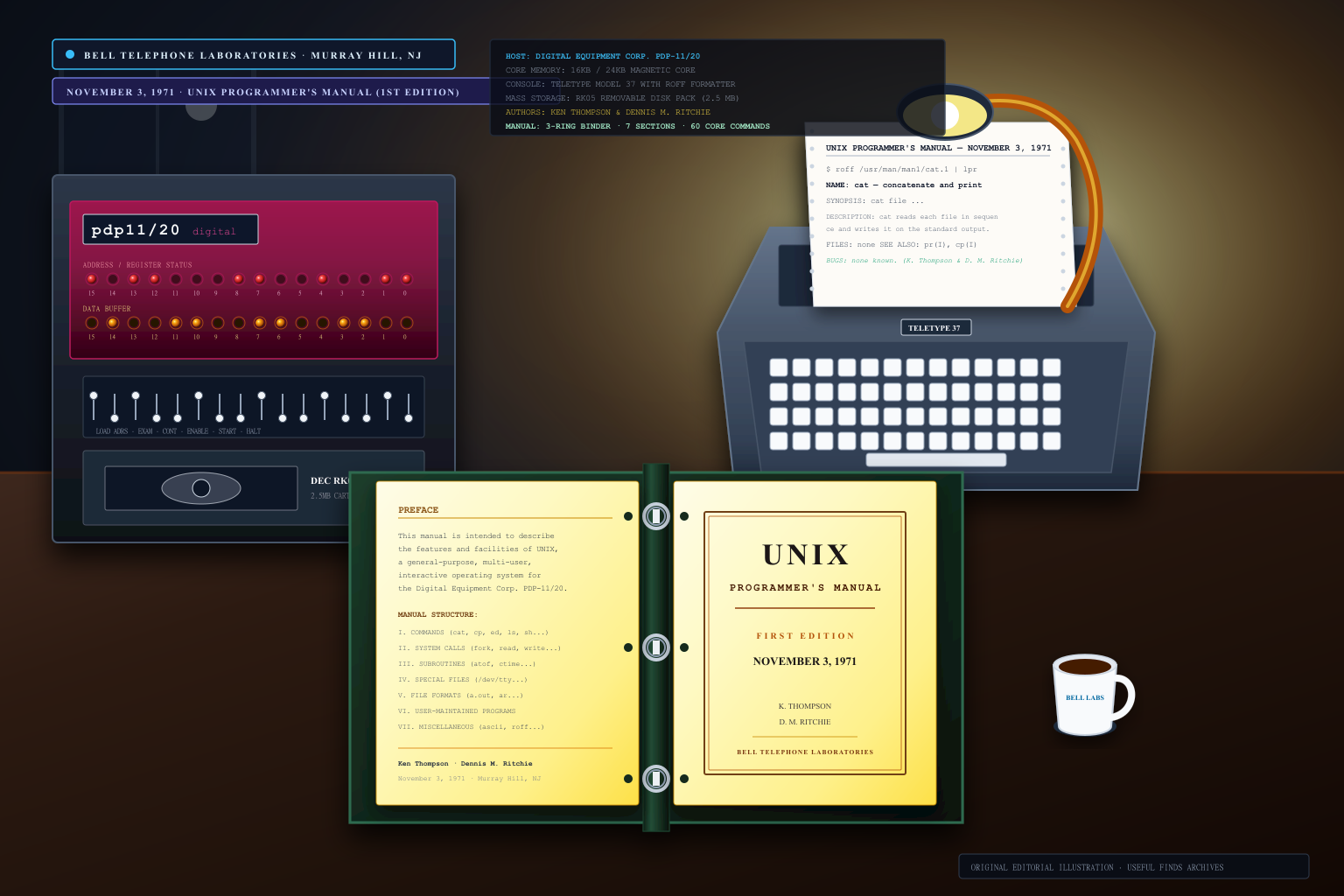
The Ring Binder That Codified Modern Computing How Ken Thompson and Dennis Ritchie Published the First UNIX Manual on November 3, 1971
Written in secret on a surplus minicomputer and justified to Bell Labs management as a patent-formatting typewriter, the November 3, 1971 UNIX Programmer's Manual introduced the pipes, commands, and modular philosophy that underpin every smartphone, cloud server, and operating system on Earth.
Read the source-led story →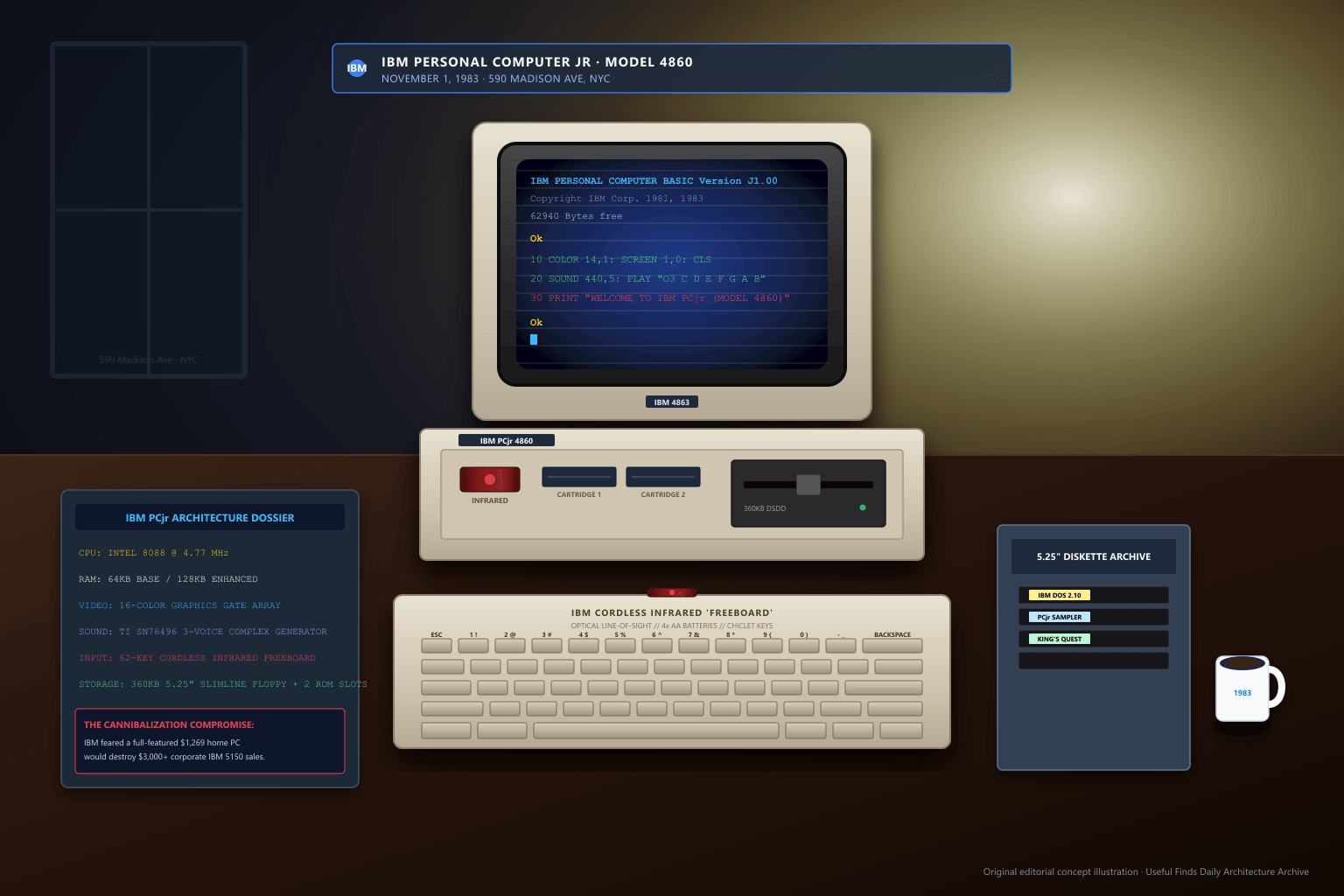
The Chiclet Keyboard That Cost IBM an Empire How the PCjr Launch on November 1, 1983 Taught Computing to Respect the Keyboard
On November 1, 1983, at its corporate gallery on Madison Avenue in New York City, IBM introduced the PCjr—its much-anticipated 'Peanut' home computer. Boasting 16-color graphics, three-voice sound, and an infrared cordless keyboard, the machine was expected to crush Apple and Commodore in the consumer market. Instead, its squishy rubber chiclet keys sparked one of the fiercest backlashes in consumer electronics history, forcing IBM into an embarrassing retreat and permanently proving that user input ergonomics cannot be compromised.
Read the source-led story →EDITORIAL METHODOLOGY
Every historical record in the Useful Finds Daily archive begins with verifiable primary documentation. When institutional archives disagree with popular folklore, the primary record is preserved.